kal
Forum Administrator
Joined: 06 Mar 2006
Posts: 18114
Location: Ottawa, Canada
TV/Projector: JVC DLA-NZ7
|
| Posted: Fri Aug 23, 2013 8:28 pm Post subject: Shane [Blu-ray] |
|
|
Another reference disc!
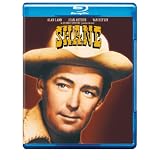
Shane [Blu-ray] (2013)

Disclaimer: Using the affiliate links above helps support our forum at no extra cost to you. CurtPalme.com is a participant in the Amazon Services LLC Associates Program, an affiliate advertising program designed to provide a means for sites to earn advertising fees by advertising and linking to amazon.com.
| Quote: | One of the all-time great western films, 'Shane' explores potent issues, acutely delineates character, and sustains a subtle emotional thread with simplicity, grace, and an artistry that was the hallmark of its acclaimed director, George Stevens. Iconic moments abound in this tale of courage, family values, and individualism that's far from a typical genre shoot-'em-up. Oscar-winning cinematography, excellent performances, a literate script, and inspired direction combine to create a film rich in meaning and spirit that never fails to touch and move us, no matter how many times we've seen it. Warner's Blu-ray presentation is top-notch, featuring a glorious Technicolor transfer and appropriately explosive audio. Thin supplements are the only stain on this otherwise impressive release that no classic film buff should be without. Highly recommended.
The Video: Sizing Up the Picture
'Shane' was originally scheduled for an early June Blu-ray release, but the reason for its delay actually dates back six decades to its 1953 premiere when the film was caught in the crosshairs of the widescreen revolution. George Stevens originally shot 'Shane' in the traditional 1.37:1 aspect ratio in 1951, but by the time the methodical director finished his meticulous editing of the movie, the widescreen process was poised to forever transform the motion picture industry, and no studio wanted to be left in the dust. So right before 'Shane' opened, Paramount cropped Loyal Griggs' gorgeous cinematography on the top and bottom of the frame so the film could be exhibited in the wider 1.66:1 format. 'Shane' thus became the first widescreen film of the modern era, beating by eight months the release of 20th Century Fox's highly touted CinemaScope epic, 'The Robe.' Only when 'Shane' premiered on television did viewers first see Stevens' original 1.37:1 version.
Rightfully, all home video editions of 'Shane' also used the original framing of the film, because it was ideally suited to 4:3 TV screens. But when it came time to produce a Blu-ray rendering of the classic western, 4:3 televisions had become obsolete, so Paramount decided to restore the 1.66:1 version of 'Shane' to maximize the widescreen real estate. The director's son, George Stevens Jr., who, as a 19-year-old, worked on the film as a production assistant, reviewed each shot for optimal framing, and, after the high-def transfer was struck, publicly stated he believed the restored 1.66:1 version would have met with his father's enthusiastic approval. Purists, however, cried foul, and the resulting online firestorm (director Woody Allen even voiced his objections) prompted Warner Home Video, which had since licensed the film from Paramount, to cancel the widescreen version and release the original on Blu-ray instead. While it would have been fantastic to have a 'Shane' edition featuring both aspect ratios (much like Criterion did with 'On the Waterfront,' which had three), WHV told Stevens, Jr. putting both versions on a single disc would not be possible.
Turning 'Shane' into a two-disc special edition would have been an expensive prospect, and I can understand WHV's reluctance. Though I would have loved to see the restored 1.66:1 version (and still hope to one day), my preference is always the director's original intent, and the 1.37:1 transfer scores such high marks it erases any disappointment. Without a doubt, this is how 'Shane' deserves to be seen, and even the most discriminating fan will be thrilled by this spectacular effort.
Lush, vibrant, and stunningly clear best describe the 'Shane' transfer, which maintains a lovely, but not obtrusive, grain structure that shows off Griggs' breathtaking, Oscar-winning cinematography to its best advantage. Contrast is pitch-perfect and accentuates the marvelous feeling of depth that distinguishes the sweeping vistas, which still look panoramic, even in the Academy ratio. Griggs used special lenses to make the Grand Teton Mountains look more immediate, and seeing the majestic, snow-capped peaks jut up behind the plateau's earthy landscape and sparkling streams is striking. Even utilitarian two-shots exude a hint of dimensionality that makes the drama feel more immediate. A master of composition, Stevens carefully and brilliantly constructed each angle to achieve the highest degree of impact (which makes it almost impossible to imagine the widescreen crop), and the transfer's color balancing and temperature beautifully complement his estimable technique.
Hues are rich and bold, but still appear natural and cohesive - not always easy when dealing with Technicolor. Blue skies, green fields, and varying shades of brown and gold keep the eye engaged, while deep black levels, rock-solid whites, and stable, true fleshtones tie nicely into the palette. The day-for-night scenes composing the bulk of the film's climax are dazzling in their clarity and presence, with not a hint of crush obscuring any details. Background elements are also crystal clear, and fabrics, from the fringe on Shane's vest to Wilson's ominous leather glove, flaunt appropriate grades of texture.
Close-ups look great, too, especially those of the fresh-faced and wide-eyed Brandon De Wilde. At age 51, Jean Arthur could pass for 10 years younger, but her tight shots are diffused - a typical way of photographing leading ladies in that era - and they constitute the only soft moments in an otherwise crisp and elegant presentation. Warner, as usual, treats its vintage product with the utmost respect, scrubbing away all print defects, such as marks or scratches, and shying away from any enhancements. Without question, this is an A-plus transfer that does this classic movie proud, heightening its raw power while stimulating our senses.
The Audio: Rating the Sound
George Stevens was one of the first directors to champion the narrative impact of audio and put sound on the same artistic plane as images. He became a sound pioneer of sorts in the 1950s, and his innovations more than likely contributed to the high level of audio we enjoy in movies today. For 'Shane,' Stevens wanted an explosive sound for each burst of gunfire, and went to great lengths - reportedly firing small cannonballs into trashcans - to achieve the desired effect. The first jolt, when Shane demonstrates his sharpshooting skills to young Joey, almost knocks you out of your chair, thanks to a potent DTS-HD Master Audio 2.0 track that supplies as much power as some of its 5.1 cousins. But the intermittent blasts also challenge the balance of the rest of the mix, which requires some volume tinkering to achieve a comfortable level. All in all, though, this track delivers solid audio, marked by bright, expansive high end tones and resonant lows, with plenty of ambient subtleties in between providing wonderful nuances.
Any age-related imperfections have been meticulously erased, leaving a clean, vibrant track that complements the frontier setting and tense confrontations well. In addition to the gunfire, accents such as shattering glass, fisticuffs, and splintering wood are remarkably potent, while Victor Young's pedestrian yet eminently hummable music score enjoys a high degree of fidelity and tonal depth, with the soaring crescendos nicely resisting distortion. Though there's not much in the way of stereo separation or opportunities for rumbling bass, the track possesses a full-bodied, expansive feel that belies its vintage roots.
The audio's biggest problem, unfortunately, is the dialogue, which occasionally sounds a bit muffled. This may well be an issue with the original mix, but the inability to comprehend certain lines somewhat hampers enjoyment of the film. Conversations also seem to be pitched at a slightly lower level than other elements of the track, but thankfully the discrepancy isn't very severe.
Despite this one caveat, the audio for 'Shane' is crisp and powerful, and Stevens would certainly relish hearing the gunfire in all its lossless glory. |
Kal
_________________

Support our site by using our affiliate links. We thank you!
My basement/HT/bar/brewery build 2.0
|
|