|
As this forum is rarely used anymore, we've locked it. Feel free to browse and read. Questions? Please reach out to us directly. Cheers! |
|
|
 |
|
|
| Author |
Message |
holdenkicks
Joined: 29 May 2011
Posts: 56
|
| Posted: Thu Jun 02, 2011 10:19 am Post subject: troubles focussing 1271, G2 screw won't move independantly |
|
|
Hi all
Im a newbie CRT owner (have pity on me!), and just last night I hung my Sony 1271 on the ceiling. The tubes are in great nick, and the unit has less than 4000 hours on it. What im finding though is that I cant achieve an acceptable level of focus anywhere on the screen.
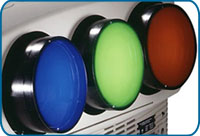
Part of my trouble is that the G2 screw (this is the screw near the front, for adjusting corner focus) on all three lenses, will not move independantly of the G1 screw on the back of the lens (the screw used for adjusting centre screen focus). So in order to move the g2 screw at all, I have to loosen the wingnut on the g1 screw, and then they both move together. Is that normal? Am I missing something here? I followed the dealers installation manual which I have, and it seems to suggest that these screws should move independantly of each other, which would make sense to me.
Also, I've tried adjusting the trim pot for the electronic focus of the green tube with no improvement. When viewing the "H" inbuilt test pattern I can only very faintly see the individual dots that make up the H characters.
Am I missing something here? My screen size is 176x99 centimetres (thats 16:9) (4:3 ratio = 99") but obviously the test pattern spills over the top and bottom because the pattern is 4:3. The projection distance is about 99" which is within spec for the screen size.
I can't understand why I cant get perfect focus anywhere on the screen? I have read a bit about adjusting the astig but I think that involves opening eveything up and adjusting something on the crt neck which im not willing to do because its now upside on the ceiling and its not coming down!
So, any help on improving the focus is greatly appreciated! Thanks!
_________________
Barco Graphics 808s, ceiling mounted front projection,
|
|
| Back to top |
|
 |
holdenkicks
Joined: 29 May 2011
Posts: 56
|
| Posted: Thu Jun 02, 2011 11:08 am Post subject: |
|
|
I have another question....
I'll only be displaying widescreen (16:9 and wider) ratio content like dvd's and blu-rays on this setup, and I need to have the screen at ceiling height, meaning the the centre of the projected 4:3 test patterns is too low. If I use the zone controls to move the raster up high, to the point where its off the edge of the phosphor, can I counteract this situation by simply using the blanking so the raster isnt shooting off the edge of the phosphor?
_________________
Barco Graphics 808s, ceiling mounted front projection,
|
|
| Back to top |
|
|
mc86
Joined: 20 Sep 2008
Posts: 767
Location: pittsburgh, pa
TV/Projector: ECP 4500 (Vidikron box), ECP4500+, wanting 07MS/07MTS, evaluating pc soft-blend
|
| Posted: Thu Jun 02, 2011 8:31 pm Post subject: |
|
|
Your screen is about 5.3ft x 3ft (100cm) at 100"? This seems too small at that distance. You want to fill the image in the raster and then locate the PJ distance where it will focus, if at all possible. This insures you use the max phosphor area. Review the setup guide below a bit more. You are right the two lenses should move independently. The part nearest to tube does center/overall focus and the front does the edges. You want image to be in the raster area.
http://www.curtpalme.com/CRTSetupGuide.shtm
Also, to better understand the electron beam focus on the tube face and then the subsequent optics to the screen, the paper linked here is helpful...
http://www.curtpalme.com/forum/viewtopic.php?p=286269#286269
Others can weigh in on raster/image location, but that idea sounds screwed up to me...Could he tilt the PJ pointing up more so the image is centered where you want it? The part shooting on the ceiling is of no matter except not seeing that part might mess up how the convergence adjustments on the area of the raster you care about works...dunno.
Matt
|
|
| Back to top |
|
|
holdenkicks
Joined: 29 May 2011
Posts: 56
|
| Posted: Fri Jun 03, 2011 4:29 am Post subject: |
|
|
| mc86 wrote: | Your screen is about 5.3ft x 3ft (100cm) at 100"? This seems too small at that distance. You want to fill the image in the raster and then locate the PJ distance where it will focus, if at all possible. This insures you use the max phosphor area. Review the setup guide below a bit more. You are right the two lenses should move independently. The part nearest to tube does center/overall focus and the front does the edges. You want image to be in the raster area.
http://www.curtpalme.com/CRTSetupGuide.shtm
Also, to better understand the electron beam focus on the tube face and then the subsequent optics to the screen, the paper linked here is helpful...
http://www.curtpalme.com/forum/viewtopic.php?p=286269#286269
Others can weigh in on raster/image location, but that idea sounds screwed up to me...Could he tilt the PJ pointing up more so the image is centered where you want it? The part shooting on the ceiling is of no matter except not seeing that part might mess up how the convergence adjustments on the area of the raster you care about works...dunno.
Matt |
Hi, thanks for the info, and confirming the question about the lenses.
I just measured the image output of my HTPC (1280x720 res, screen height adjusted to minimum setting to get it down to about a 16:10 ratio) (The projector defaults to stretching the 1280x720 image to 4:3 ratio, am I doing something wrong here?) and its 82" diagonal at a 101" projection distance, green lens to screen. I cant move the projector forward but I could move the screen forward by say 4".
2. looking into the lens face, I can see that the raster area is quite a bit bigger than the image area with the raster. No setting I have fiddled with so far has been able to make the image bigger in the raster area, but rather I've only been able to adjust the overall raster size. (refer question 2 below)
3. Also, presently my red and blue raster as really close (like, 2mm) away from the centre vertical edge of the tube face (i.e they are as close to the green tube as possible) just to get the correct convergence at this image size. According to the sony manual, screen sizes 85" and smaller should use the small lens spacer (and not the medium one that Im using now) but it is referring to 4:3 ratios images, and not 16:9. (see question 3)
New questions:
1. So, how do i get the G1 and G2 screws on the lens to move independently?
2. What setting do I need to adjust to make fuller use of the raster area?
3. Should I use the small lens spacer? Will this result in being able to move the red and blue raster further from the edge of the tube face?
_________________
Barco Graphics 808s, ceiling mounted front projection,
|
|
| Back to top |
|
|
Curt Palme
CRT Tech
Joined: 08 Mar 2006
Posts: 24396
Location: Langley, BC
TV/Projector: All of them!
|
| Posted: Fri Jun 03, 2011 5:35 am Post subject: |
|
|
OK, I'll jump in. 
The throw distance is about 1.4 X the width of the screen, that's pretty standard for all CRT projectors save for very few. If you're within a couple of inches of that, you're fine. NEar the top middle of the remote or keypad is the RGB SIZE and POSITION control. That adjusts the RGB size if the image within the raster. Use that to bring the image to be close to the edges of the raster. That will maximize your tube life and resolution out of the tubes.
THere is an air gap between the lenses and the tubes, and dust gets in there, esp with the blue and green, as they are close to the HV power supply which will attract dust and dirt. Put the set on the ground, pull out the LVPS, then use an 8mm hex driver to take the nuts off that hold the lenses and lens frame to the chassis. It's a PITA, but cleaning the tube face and the back of the lens with water and lens paper will remove the dust film, and the focus should improve. If it turns out to be clean, then your focusing is being limited by the tubes themselves. ES focusing tubes as in the 12XX series does get worse over time, and even with no tube wear, the focusing will get worse. You start seeing the difference at about 2500 hours or so. Nothing you can do about that except tweak the focusing as good as you can, and maybe use a lower resolution, 800 X 600 might look better.
As for the lens wingnuts, the back one rotates by loosening it and grabbing the wing nut and sliding the lens and wing nut from side to side. The back wingnut is the main focus. THe front wingnut loosens as well, but then you grab the front of the lens barrel instead of the wingnut, and the lens barrel rotates around the wingnut. It's possible that one of the lenses has frozen in place, but I've never seen that happen on a Sony lens.
Do use the small spacers. 67" wide is a very small screen, so the R and B rasters most likely will be a bit off center, but as long as the image isn't shooting off the phosphor face, you should be fine.
|
|
| Back to top |
|
|
holdenkicks
Joined: 29 May 2011
Posts: 56
|
| Posted: Fri Jun 03, 2011 8:07 am Post subject: |
|
|
Hi Curt, thanks for the tips. Thanks to your description I can now focus the corners properly. I thought I was doing something wrong! Also, this is a great web site you have, so much info, it's awesome. Maybe some of the experiences I've had here could be included on the sony 12xx pages? Interestingly, in contrast to what I read on here, my 1271 has the 21 point zone convergence, which I thought only the 1272 has. Odd. Could someone have upgraded mine?
However, I have already tried the RGB position control and found that it moves the whole raster, rather than just the image within the raster. I have read the whole guide here: http://www.curtpalme.com/TubeRasterSetup2.shtm and am confident that I'm not getting the raster and the actual image size mixed up. Showing the full test pattern, with no blanking at all, there is about a 1cm gap between the edge of the test grid and the edge of the raster on both left and right side, on all tubes.
Also, heres a quick update before I bring on more questions.
Looking through the narrow gap between lens face and tube face, I can see dust in there. Taking the projector down off the ceiling would be a total bitch and involve borrowing the mechanical lifters I used to get it up there. I'm not on the greatest terms with the guy who I borrowed them from so I don't want to burn any bridges or push my luck. So I won't be pulling it down if there is any way of avoiding it.
That said I think I've worked out how to unscrew the three lenses individually without moving the HV and power blocks so I can clean the tube face and lenses, I just have to buy a long philips screwdriver.
Ok so just because I didn't mention it before, I have tilted the projector up as high as I can (with a wedge driven between the back of the projector and the ceiling), meaning if I display a 4:3 test pattern the top edge is right on the ceiling cornice, so I can still converge it properly but then when displaying a source I have to move the whole raster upwards. Still OK though, cause its not off the tube face.
I'll be aiming to get said screwdriver and both clean the lens/tube faces and change spacer to small one tonight. I'll let you know how that goes.
EDIT: Just cleaned the blue lens (it had minimal dust, but the tube face had a reasonable amount) and changed the blue lens spacer to small. Now I can't focus all four corners properly at the same time. I can have two or three corners focussed, depending on how I tweak the lens, but not all four. Will try fiddling with raster position but if that doesn't work im going back to the medium spacer.
_________________
Barco Graphics 808s, ceiling mounted front projection,
|
|
| Back to top |
|
|
Curt Palme
CRT Tech
Joined: 08 Mar 2006
Posts: 24396
Location: Langley, BC
TV/Projector: All of them!
|
| Posted: Fri Jun 03, 2011 12:48 pm Post subject: |
|
|
Yes, the set most likely got upgraded, it was a popular thing to do when the 12XX were all the rage, so you got lucky.
As for the RGB size, you might need the front and back porch settings in the video driver changed in the HTPC, I'll let the computer guys chime in with info on that.
Focusing- you're right, if the corners are off, then do go back to the medium spacers. Whatever gives the best results.
You can also do a mod that gives continual corner focus adjustments. I haven't done this, but other 12XX owners have:
http://www.curtpalme.com/Sony125x_SpacerMod1.shtm
It sounds like you're a real hands-on guy, which is exactly what a CRT projector needs. have fun!
|
|
| Back to top |
|
|
holdenkicks
Joined: 29 May 2011
Posts: 56
|
| Posted: Fri Jun 03, 2011 12:58 pm Post subject: |
|
|
Hi Curt, thanks. Happened to see in my installation manual for dealers, page 122, panel C it says there is 21 points of convergence for the 1271QM (def right manual, its says 1271QM on the front). So it was standard for my projector... interesting!
Got the 10" screwdriver (magnetic tip, will that affect the tubes?). Removed the lens without removing the power block. I cleaned the blue lens put it back to medium spacer and focus is improved although far from perfect.... probably the same as what it was before. blue is the worst of the 3 and I think Ill just have to accept that its due to the tubes having done over 3000 hours. Its still OK.
_________________
Barco Graphics 808s, ceiling mounted front projection,
|
|
| Back to top |
|
|
Curt Palme
CRT Tech
Joined: 08 Mar 2006
Posts: 24396
Location: Langley, BC
TV/Projector: All of them!
|
| Posted: Fri Jun 03, 2011 1:01 pm Post subject: |
|
|
No issues with teh magnetic screwdriver. I can never remember what version of the 12XX had the 21 point convergence, so you're probably right.
You realize that the 12XX is just a stepping stone. Keep an eye out for an EM focusing set like a Barco, NEC or Marquee, and you'll be in heaven.
|
|
| Back to top |
|
|
holdenkicks
Joined: 29 May 2011
Posts: 56
|
| Posted: Sat Jun 04, 2011 12:02 am Post subject: |
|
|
yeah i read on your site that its only mid range, and have read about the benefits of sets with em focus. It would be great but i won't hold my breath for anything great to show up locally in nsw australia.
its good to know that i'm not doing any damage with the magnetic tip. Thanks heaps mate. 4 years ago i actually swapped out a tube on a sony vph1000. I'm quite interested in doing that focus mod you linked. Do you think there is any way of doing it while the projector is still on the ceiling? I guess i'll have a look at my service manual to get an idea of whats under the circuit boards etc. If the tube will come out forwards by say 2 inches by simply undoing the 4 nuts on the front then i should be able to do it while on the ceiling. Thoughts? Tips?
_________________
Barco Graphics 808s, ceiling mounted front projection,
|
|
| Back to top |
|
|
Curt Palme
CRT Tech
Joined: 08 Mar 2006
Posts: 24396
Location: Langley, BC
TV/Projector: All of them!
|
| Posted: Sat Jun 04, 2011 1:33 am Post subject: |
|
|
|
I haven't done it, sorry! Someone else submitted that a few years ago. Anyone else here ever do that mod?
|
|
| Back to top |
|
|
holdenkicks
Joined: 29 May 2011
Posts: 56
|
| Posted: Sat Jun 04, 2011 4:17 am Post subject: |
|
|
| Curt Palme wrote: | | I haven't done it, sorry! Someone else submitted that a few years ago. Anyone else here ever do that mod? |
Fair enough mate. Well, let me try a different question. Have you ever removed the tubes on a 12xx? Is it simply a case of undoing the 4 bolts and it'll comes loose (wires still attached, of course) or do you have to disconnect half the wires at the back of the tube to get enough free play to bring the tube out by 2"? Thanks for all your help too mate. Do you accept paypal donations?
_________________
Barco Graphics 808s, ceiling mounted front projection,
|
|
| Back to top |
|
|
holdenkicks
Joined: 29 May 2011
Posts: 56
|
| Posted: Sat Jun 04, 2011 4:22 am Post subject: |
|
|
just flicked over a donation on paypal then, cheers again!
_________________
Barco Graphics 808s, ceiling mounted front projection,
|
|
| Back to top |
|
|
Cube
Joined: 06 Dec 2009
Posts: 77
Location: IL, USA
|
| Posted: Sat Jun 04, 2011 11:42 pm Post subject: |
|
|
I have a 1272 so maybe my experience can help a little bit... here's some tips in no particular order. Sorry if it's all stuff you've already figured out.
When you positioned the projector, did you make sure to follow the instructions for placement in the Sony setup manual? For a 16:9 screen, pretend it is a 4:3 screen with the same width but a taller height when referring to the manual. I.e., you are going to place the projector for an imaginary 4:3 screen but only project a 16:9 raster (same width, but not as tall) in that space.
To totally maximize the 16:9 raster on the 16:9 screen you'll need to move the projector just a little bit further away than the manual suggests for 4:3, but you need to carefully do this through trial and error as you enlarge the raster. This site already has guides for optimizing your raster, so I'll leave it at that. My projector happens to be on the floor so this part was easy for me, but in your case it may be more difficult. I hope your ceiling mount is adjustable.
For the lens focus, you should be able to do the corner focus by tightening the back screw and loosening the front screw; then, very gently rotate the front part of the lens. If you don't loosen the front screw enough, or if the back screw is loose, the friction will cause both sections to move and mess up your focus. Just be careful. Then you can try the electronic focus pots, but don't expect to get razor-sharp sharpness on these projectors. You can make mods for the lenses that will let you set toe-in for better raster optimization on the R and B tubes as well as Scheimpflug adjustment to better focus the corners, but IMHO it's overkill for these 12xx projectors. The tubes really aren't even up to 720p-level resolution, so if you absolutely must have a very sharp picture, you need a nicer projector or a digital.
You shouldn't need to mess with the astig, hopefully; check that the pixels in the built-in H test pattern are round with the bright part in the middle, not flared diagonally. On my set I was able to just leave it alone. If you want to mess with it be sure to read all the precautions because you really can electrocute yourself doing it.
When you're adjusting the raster, take care to note the difference between the geometry SIZE adjustment and the RGB SIZE adjustment. The former is what you use when you're setting up the geometry the first time. The latter is for fine tweaking if a particular input is just a little bit off. RGB SHIFT moves the signal around inside the raster, so center that up as well. You may need to look into the tube when you're doing it--wear sunglasses or lower the brightness and contrast way down.
Let the projector run for an hour or two to stabilize the image before you try to set up the geometry. To align the 16:9 geometry, you can not use the 4:3 test patterns built in to the projector (the corners will not stay converged when you scrunch the image down for 16:9). Instead, use a 16:9 test pattern from your primary high-def source. I burned a free AVS HD 709 disc and used the Small 1080p Crosshatch as well as Crosshatch with Circles patterns.
When you're using the geometry adjustment controls on the remote, holding down the TEST key for a few seconds will make the built-in test pattern go invisible and show you the image from your source. The trickiest part is the zone convergence, where you will need to remember the position for each numbered zone as the cursor will no longer be visible. Also, most importantly, be sure to get the keystone, pincushion, and linearity settings right before you mess with zone!
Lastly, here's a few things the manual doesn't state explicitly: Zone 1 is special; it adjusts the centering for the entire geometry of that lens. It's the one zone adjustment you always need to do before any of the other geometry. CENT R B is a shortcut for the Zone 1 adjustment on the R and B tubes; pressing both gives you Zone 1 for G. When you're doing the centering, you have both "f" (fine) and "c" (coarse) adjustments. Holding the arrow keys down does a coarse adjustment, while tapping it does a fine adjustment. I never mess with the G centering now that I've got it set up, but every few weeks the R and B get slightly misaligned and I need to use fine adjustments to recenter them. (My horizontal linearity on B likes to drift a bit too. Check the test pattern every month or so or before showing a movie to guests.)
In addition, Zones 2-5 are special and let you do an additional adjustment on the horizontal and vertical linearity for half of the screen. The rest of the zone points are local adjustments.
|
|
| Back to top |
|
|
holdenkicks
Joined: 29 May 2011
Posts: 56
|
| Posted: Sun Jun 05, 2011 1:16 pm Post subject: |
|
|
hi cube, thanks very much for writing up all of that information! I have read the manual but at least half of what you wrote is new to me. I'm especially thankful for the trick about hiding the inbuilt test pattern while converging. I've got test pattern software, nokia monitor test, and find that its convergence pattern looks out even though the built in one looks perfect. Also, i actually squash the raster down to minimum height before doing the rest of the registration and convergence settings.
_________________
Barco Graphics 808s, ceiling mounted front projection,
|
|
| Back to top |
|
|
Cube
Joined: 06 Dec 2009
Posts: 77
Location: IL, USA
|
| Posted: Mon Jun 06, 2011 12:33 am Post subject: |
|
|
That's good... then it sounds like if you use the normal SIZE control to shrink the internal test pattern to 16:9 it should work out. In my case, I'm using a 4:3 screen and wanted to converge both 4:3 and 16:9 rasters. I used the internal pattern for 4:3 and the source test pattern for 16:9 to make sure everything worked out.
One other thing I should have mentioned... because of how these projectors store the convergence settings, there are overlaps in the some of the modes. 480p and 1080i both sync under memory block 4, so they have to share settings. 720p is problematic because it syncs right on the margin between memory blocks 5 and 6; every time you switch to the 720p source, it will randomly lock on to one of the two blocks.
If you want to use 720p, what you have to do is start with the test pattern on just one memory block (say, 5--check which one you're using currently with the PAGE key). After you get all the convergence done for 5, very carefully write down all the settings you used for geometry, zone, RGB size, etc. It's incredibly tedious but it makes the next step go faster. (I ended up doing this for all my resolutions just in case of a memory loss disaster. Wouldn't want to have to do it again though.)
Next, you switch back and forth until the 720p source locks onto block 6, then you go through and enter all the same settings you used for 5. Frustratingly, this also means that if the convergence drifts a bit after a few weeks, you'll need to make tweaks for both blocks 5 and 6. (Alternatively, you can just set one of the blocks up and ignore the other, then flip back and forth until it locks onto the one you want--however, this gets very annoying, as you'll need to do it every time the projector loses the sync and tries to re-lock, such as if the signal blips out on your OTA receiver or you switch sources.)
However, you really only need to worry about that if you're using a 720p source directly. A good alternative is to use 1080i for everything or use an upscaler to increase the resolution so it stays in one memory block. For old 4:3 video game systems, I'm using a cheap component video -> VGA transcoder/upscaler that bumps the signal up to 1440x900, which falls squarely in block 7. If you're using a HTPC, you can simply choose a resolution other than 720p to save yourself a headache.
Don't use a 1080p upscaler though; this projector can barely handle the signal so it looks fuzzy and runs hot.
|
|
| Back to top |
|
|
holdenkicks
Joined: 29 May 2011
Posts: 56
|
| Posted: Mon Jun 06, 2011 3:57 am Post subject: |
|
|
| Cube wrote: | That's good... then it sounds like if you use the normal SIZE control to shrink the internal test pattern to 16:9 it should work out. In my case, I'm using a 4:3 screen and wanted to converge both 4:3 and 16:9 rasters. I used the internal pattern for 4:3 and the source test pattern for 16:9 to make sure everything worked out.
One other thing I should have mentioned... because of how these projectors store the convergence settings, there are overlaps in the some of the modes. 480p and 1080i both sync under memory block 4, so they have to share settings. 720p is problematic because it syncs right on the margin between memory blocks 5 and 6; every time you switch to the 720p source, it will randomly lock on to one of the two blocks.
If you want to use 720p, what you have to do is start with the test pattern on just one memory block (say, 5--check which one you're using currently with the PAGE key). After you get all the convergence done for 5, very carefully write down all the settings you used for geometry, zone, RGB size, etc. It's incredibly tedious but it makes the next step go faster. (I ended up doing this for all my resolutions just in case of a memory loss disaster. Wouldn't want to have to do it again though.)
Next, you switch back and forth until the 720p source locks onto block 6, then you go through and enter all the same settings you used for 5. Frustratingly, this also means that if the convergence drifts a bit after a few weeks, you'll need to make tweaks for both blocks 5 and 6. (Alternatively, you can just set one of the blocks up and ignore the other, then flip back and forth until it locks onto the one you want--however, this gets very annoying, as you'll need to do it every time the projector loses the sync and tries to re-lock, such as if the signal blips out on your OTA receiver or you switch sources.)
However, you really only need to worry about that if you're using a 720p source directly. A good alternative is to use 1080i for everything or use an upscaler to increase the resolution so it stays in one memory block. For old 4:3 video game systems, I'm using a cheap component video -> VGA transcoder/upscaler that bumps the signal up to 1440x900, which falls squarely in block 7. If you're using a HTPC, you can simply choose a resolution other than 720p to save yourself a headache.
Don't use a 1080p upscaler though; this projector can barely handle the signal so it looks fuzzy and runs hot. |
Thanks for the hints mate! I am running a HTPC, 1280x720 @ 48Hz so Its about 35.9Khz, which I believe lies in memory block 4 (conveniently, the same one that the test pattern uses!) So thus far I havent had the issue that you've described, but I guess if I ever use another source (e.g standalone bluray player) then it will be good to know this stuff!
I may use 4:3 for video games but that will be later down the track, and for that I'll just use composite (its just a nintendo wii, graphics arent important).
_________________
Barco Graphics 808s, ceiling mounted front projection,
|
|
| Back to top |
|
|
Cube
Joined: 06 Dec 2009
Posts: 77
Location: IL, USA
|
| Posted: Tue Jun 07, 2011 12:43 am Post subject: |
|
|
|
I haven't tried anything but 60 Hz on mine... how flickery does 48 Hz look on yours?
|
|
| Back to top |
|
|
holdenkicks
Joined: 29 May 2011
Posts: 56
|
| Posted: Tue Jun 07, 2011 3:11 am Post subject: |
|
|
| Cube wrote: | | I haven't tried anything but 60 Hz on mine... how flickery does 48 Hz look on yours? |
hi mate
With a static, bright image, like an explorer window on the HTPC, the flicker is noticable but not really annoying. With any video, which is what most of us use our PJ's for, there is no noticable flicker at all. And normally just looking at a computer CRT monitor I can tell the difference between 60Hz to 75Hz, and the diff between 75Hz and 85Hz (with static images of course).
I read to use 48hz here: http://www.curtpalme.com/docs/Sony_1270Q_CRT_Projector_Setup_Manual_April.pdf in the refresh rate section 1.2 of that document, as it explains that its good to use a multiple of the video frame rate (e.g 24 FPS).
_________________
Barco Graphics 808s, ceiling mounted front projection,
|
|
| Back to top |
|
|
AnalogRocks
Forum Moderator
Joined: 08 Mar 2006
Posts: 26706
Location: Toronto, Ontario, Canada
TV/Projector: Sony 1252Q, AMPRO 4000G
|
| Posted: Tue Jun 07, 2011 3:37 am Post subject: |
|
|
You should see 1080i at 72hz or 96hz. Those look pretty smooth too..
_________________
Tech support for nothing
CRT.
HD done right!
|
|
| Back to top |
|
|
|
|
|
|
|
You cannot post new topics in this forum
You cannot reply to topics in this forum
You cannot edit your posts in this forum
You cannot delete your posts in this forum
You cannot vote in polls in this forum
You cannot attach files in this forum
You can download files in this forum
|
Forum powered by phpBB © phpBB Group
|
|