| Author |
Message |
KrisRoberts
Joined: 21 Jan 2007
Posts: 115
Location: San Diego
|
| Posted: Fri Feb 05, 2010 5:51 pm Post subject: |
|
|
Thanks for all the replies and information. You guys are great!
I think the performance of the NVidia kit could certainly be improved with timing adjustments. The fact that the desktop monitors and G90 behave differently makes it clear to me that subtle adjustments would help.
But I dont think it would ever be perfect on the G90 with stock tubes at 100Hz or above. And the novelty of 3D isnt compelling enough for me to seriously consider swapping tubes and dealing with the color issues.
I'd much rather keep a world class 2D image on the CRT and play with some of the reasonably affordable 120Hz DLP projectors for games and stuff in 3D.
|
|
| Back to top |
|
 |
Francis Vaughan
Joined: 28 Jul 2009
Posts: 12
|
| Posted: Sun Feb 07, 2010 4:17 am Post subject: |
|
|
| zGman wrote: | I haven't observed such a large loss using the gel filters, (or c-elements)
even accounting for the loss of the unwanted yellow. You need
to boost the tube output slightly, but not 40%. |
I was basing this on the thread https://www.curtpalme.com/forum_archived/viewtopic.php@t=5621.html which looked at Calcolor 4430 and 4460 filters as possible near c-element matches. The Roscoe data shows 70% and 60% transmission in the green respectively for these filters. Clearly these are not c-element numbers, and a filter especially designed for purpose might be expected to be better.
I'm playing with hacking up a bit of code to combine filters, emission spectra and create CIE colour coordinates. Although everyone seems focussed on matching the SMPTE gamut, understanding exactly what is possible, and possibly allowing for a much wider gamut might be fun. Some of the dichroic filters with the right phosphors would appear to allow for a very significant extension with only a small drop in light output. Less useful for movies, but possibly very nice for other applications.
I'm suspicious that a glass dichroic filter cut to size and mounted with some optical grease will have no additional losses and little to no softening of the image.
| Quote: | Although its a bit of work to remove the tube and exchange the
glycol, the colored glycol from sony tubes is pretty well engineered
to hit the primaries spot on. |
Indeed. This may be a good bet. I'm still unsure how the P43 will work out, its different spectra may make it less than optimal.
| Quote: | | What sort of engineering were you doing with the bg808s 3D system? |
We had it set up as a pathfinder semi immersive VR system. 2.4m x 3.5m rear projected screen. CrystalEyes stereo glasses, Ascension Flock of Birds motion tracking, and driven by a reasonable spec SGI Onyx-2 reality engine. We ran Division (now PTC's Windchill product) to show off mechanical CAD and architectual CAD immersive applications. We had architecture students do some projects that included immersive VR walkthrougths of their designs. Also ran molecular dynamics and other chemisty VR. Plus a few fundamantal research projects. One simulated the field of view distortions seen when wearing corrective optics, and was quite amazing, but there just wasn't enough horsepower in the graphics back then to do it really well. Astounding to think how much blood was spilled to get the money to buy the SGI box. Now it sits as an ornament in the entrance lobby.
|
|
| Back to top |
|
|
Francis Vaughan
Joined: 28 Jul 2009
Posts: 12
|
| Posted: Wed Feb 10, 2010 12:35 am Post subject: |
|
|
Following up on my own posts about dichroic filters. I suspect that I have overlooked a vital issue with a dichroic filter placed in front of the tube. These filters are only useful (i.e. the wavelength of light they are tuned to remains constant) at angles of incidence less than about 15 degrees. This constraint is likely to be violated for a filter sitting in front of the tube. I suspect a sufficiently important fraction of light will come thought he filter at greater than this angle, and thus one would get shifting of the filter enough to render it less than useful. The cost of the filters has also proven to be a bit of a sticking point.
I think I'm back to tinting the glycol.
|
|
| Back to top |
|
|
noos@xp37+
Joined: 17 Jun 2008
Posts: 464
Location: Berlin/Munich
|
| Posted: Fri Jan 07, 2011 10:09 am Post subject: |
|
|
Hello, I created that post because I also have the bottom ghosting with 3d vision:
https://www.curtpalme.com/forum_archived/viewtopic.php@t=24929.html
You can read there that it is because of a small delay of the USB signal in the USB path through the Computer and it´s mainboard. The link with the solution provides only two mainboards that work, but I would like to the CRT users post their mainboards, and if they do ghost or not with nvidia 3d vision. Probably you can add your´s too....
Best regards from Munich
Marc
|
|
| Back to top |
|
|
zich6
Joined: 02 Aug 2010
Posts: 9
Location: United States
|
| Posted: Fri Jan 07, 2011 2:12 pm Post subject: |
|
|
|
Has anyone seen a spectral anaylsis?
|
|
| Back to top |
|
|
Alan Head
Joined: 07 Aug 2006
Posts: 38
|
| Posted: Fri Jan 07, 2011 4:59 pm Post subject: |
|
|
I have spent a considerable amount of time experimenting 3D over the years with different shutter glasses. The following may be of interest :-
Setup :-
G90 CRT Projector with P19LUG tubes, HTPC based on ASUS P7P55D motherboard, Blackmagic Intensity Pro 1080i capture card. Radiance XE+ 3D Video processor.
Glasses :
Nvidia 3DVision
Edimensional wired via VGA dongle
Edimensional IR via VGA dongle
Samsung SSG 1000 modified to run from Edimensional VGA dongle.
Conclusions :
NVidia customer support non existent when you are using CRT technology despite their own spec saying system supports CRT monitors with high refresh rate capability. NVidia glasses look good from an aesthetic point of view but suffer from severe ghosting (on IIyama CRT monitor as well as G90)
Edimensional glasses work well with virtually no ghosting but image rather dark.
Samsung glasses offer best compromise, much more light coming through than Edimensional and virtually no ghosting.
I have improved the ghosting on Nvidia glasses by running a much higher vertical resolution than I need and then overscanning the picture to get it where I want on screen. This improves the ghosting at the expense of bandwidth. So the big problem with NVidia is a lack of sync adjustment for the glasses.
Other Info :
I have just bought the Radiance XE+ 3D and as it develops with full CRT 3D Support I hope to settle on one type of glasses. I suspect with the Radiance 3D, Sync will end up really good (Lumagen customer support is in a different league to NVidia) and I am sure P19LUG tubes will be fine. Watching Avatar in 3D via the Samsung Glasses the image is pretty impressive with decent 3D depth and no ghosting marring the experience. Once I have greyscale/colour calibrated the 3D input through whatever set of glasses I decide to go for I know it will look even better.
I look forward to the day my NVidia 3DVision kit can be removed from my system.
Alan Head
|
|
| Back to top |
|
|
mp20748
Joined: 12 Sep 2006
Posts: 5689
Location: Maryland
TV/Projector: 9500LC Ultra / Super 02 and 03 VIM
|
| Posted: Fri Jan 14, 2011 3:32 pm Post subject: |
|
|
Earlier in the week I got to play around with a really cool set of 3D glasses. They were of course the passive (not battery operated) type, but the best I've seen so far. And I got to compare them to one of the very best Active (battery operated) sets out there.
I was blown away by these very light and inexpensive glasses. And they restricted very little light..
Under the critical 3D test pattern evaluation, they did VERY well.
I'm not familiar with any of the consumer glasses out there, so I would not know how well they would perform in comparison.
http://www.globalspec.com/FeaturedProducts/Detail/AmericanPolarizers/3D_Eyewear/76492/0
|
|
| Back to top |
|
|
overclkr

Joined: 08 Mar 2006
Posts: 4227
|
|
| Back to top |
|
|
KrisRoberts
Joined: 21 Jan 2007
Posts: 115
Location: San Diego
|
| Posted: Fri Jan 14, 2011 6:01 pm Post subject: |
|
|
I dont know about the glasses in that auction, they look really dated/old.
Talking to Moome, the emitter that sounds good is the "Gen2 Universal Emitter" with a vesa/stereo plug adapter available from these guys:
http://www.3dmagic.com/catalog/Gen2hometransmitter.html
That emitter is allegedly compatible with a wide variety of glasses. At CES this year there were a lot of vendors with Universal IR glasses that should be compatible with with the new crop of HDMI 1.4 TVs and projectors. All the projectors I saw at the show were using IR - I didnt see any DLP-Link.
My favorite active glasses were ACTIVEYES from Volfoni – their approach is to have the glasses themselves be very light (about 1 gram) and have the sensor, battery and electronics in a little pack you clip to your shirt. That makes the glasses as light and comfortable as passive ones but still working as active shutter glasses. They were also the only universal IR glasses which demonstrated that they were compatible with nVidia 3D-Vision (no other brand I talked to knew for sure whether theirs were or not and most seemed confused by the question).
http://volfoni.com/article.php3?id_article=238
Edit - HA! After I posted that I went back and looked more closely at the auction and it looks like its from the same 3DTV Corp guys and may be the same emitter Moome was suggesting. Still not sure about the set of glasses though...
|
|
| Back to top |
|
|
overclkr
Joined: 08 Mar 2006
Posts: 4227
|
| Posted: Fri Jan 14, 2011 7:47 pm Post subject: |
|
|
| KrisRoberts wrote: | I dont know about the glasses in that auction, they look really dated/old.
Talking to Moome, the emitter that sounds good is the "Gen2 Universal Emitter" with a vesa/stereo plug adapter available from these guys:
http://www.3dmagic.com/catalog/Gen2hometransmitter.html
That emitter is allegedly compatible with a wide variety of glasses. At CES this year there were a lot of vendors with Universal IR glasses that should be compatible with with the new crop of HDMI 1.4 TVs and projectors. All the projectors I saw at the show were using IR - I didnt see any DLP-Link.
My favorite active glasses were ACTIVEYES from Volfoni – their approach is to have the glasses themselves be very light (about 1 gram) and have the sensor, battery and electronics in a little pack you clip to your shirt. That makes the glasses as light and comfortable as passive ones but still working as active shutter glasses. They were also the only universal IR glasses which demonstrated that they were compatible with nVidia 3D-Vision (no other brand I talked to knew for sure whether theirs were or not and most seemed confused by the question).
http://volfoni.com/article.php3?id_article=238
Edit - HA! After I posted that I went back and looked more closely at the auction and it looks like its from the same 3DTV Corp guys and may be the same emitter Moome was suggesting. Still not sure about the set of glasses though... |
Ok, so looks like its best to just purchase the emitter then glasses seperately. Have you checked out the Xpand glasses?
http://www.xpandcinema.com/products/glasses/X103-home/
This is a lot of fun I have to admit. Cant wait to see this setup on my stack.
Cliff
|
|
| Back to top |
|
|
KrisRoberts
Joined: 21 Jan 2007
Posts: 115
Location: San Diego
|
| Posted: Fri Jan 14, 2011 9:40 pm Post subject: |
|
|
Yes, I have seen the Xpand 103 glasses and they are quite nice. They said they got a lot of flack for the previous versions of their glasses from the home market because they were really engineered for professional/educational/commercial use - not home theater. The batteries were hard to change, they were pretty heavy duty - you could put them in a dishwasher. But the 103 series are nicer and better suited for use at home.
I did write up a little review of what I saw at CES for anyone who's interested:
http://robertsmania.com/3D/ces2011.html
|
|
| Back to top |
|
|
overclkr
Joined: 08 Mar 2006
Posts: 4227
|
| Posted: Sat Jan 15, 2011 12:22 am Post subject: |
|
|
| KrisRoberts wrote: | Yes, I have seen the Xpand 103 glasses and they are quite nice. They said they got a lot of flack for the previous versions of their glasses from the home market because they were really engineered for professional/educational/commercial use - not home theater. The batteries were hard to change, they were pretty heavy duty - you could put them in a dishwasher. But the 103 series are nicer and better suited for use at home.
I did write up a little review of what I saw at CES for anyone who's interested:
http://robertsmania.com/3D/ces2011.html |
Nice write up Kris. Very informative.
|
|
| Back to top |
|
|
mp20748
Joined: 12 Sep 2006
Posts: 5689
Location: Maryland
TV/Projector: 9500LC Ultra / Super 02 and 03 VIM
|
| Posted: Sat Jan 15, 2011 12:29 pm Post subject: |
|
|
Nice writeup. It confirmed one thing for me, and that is that there's an entirely different section at Nvidia that deals with 3D imaging.
Nvidia is THE big boy in the industry when it comes to 3D. Pixar and some of the others use Nvidia for their Graphics and graphic 3D images.
The two rack mounted devices in the first shot are their Quadro Plex Graphic engines. In that particular application, they are using 8 (four each unit) graphic pipes that drives 8 each digital projectors. You would not believe what these cost each..

Uploaded with ImageShack.us
.
The following shot shows two of the eight digital projectors in a double-stack setup. each of the two projectors have Beacons mounted right at the lens. The beacons are shutters that allows the two projectors to be used for left and right eye operation per screen. The projectors are LCD. And LCD unlike the newer technology, cannot be internally shuttered. LCD is not fast enough.
The signals from the Quadro Plex are converted to Fiber in the rack and converted back right at the projectors. Speed and timings are critical here.

Uploaded with ImageShack.us
.
A setup like this will allow the use of both Passive and Active glasses. According to the readings, the industry is at it's norm with something new, because the standards are still being defined for consumer 3D.
I can tell you this based on what I get to see and play around with. The passive glasses will be the way to go, because they are light and do not require syncing (batteries, wires, IR, timings, etc) which is an headache within itself. They will require very fast electronics that will either switch the left eye and right sequencing either in the signal chain to the project or it be done in the projectors themselves.
It's called Frame Doubling..
.
|
|
| Back to top |
|
|
CIR Engineering

Joined: 25 Aug 2008
Posts: 4269
Location: Chicago USA & Berlin Germany
|
| Posted: Sat Jan 15, 2011 4:15 pm Post subject: |
|
|
| Alan Head wrote: |
I have just bought the Radiance XE+ 3D and as it develops with full CRT 3D Support I hope to settle on one type of glasses. I suspect with the Radiance 3D, Sync will end up really good (Lumagen customer support is in a different league to NVidia) and I am sure P19LUG tubes will be fine. Watching Avatar in 3D via the Samsung Glasses the image is pretty impressive with decent 3D depth and no ghosting marring the experience. Once I have greyscale/colour calibrated the 3D input through whatever set of glasses I decide to go for I know it will look even better.
I look forward to the day my NVidia 3DVision kit can be removed from my system.
Alan Head |
We have been working on this for months now and Lumagen (Pat) sent me the first real functional 3D frame sequential firmware about ten days ago. This FW is working 3D on my G90 very well at the moment with my rigged up sync dongle for glasses output.


Pat finished the timing application in the firmware yesterday. Jim is shipping me a hand built Lumagen sync dongle on Monday that will work with the Radiance alpha firmware for glasses output. Pat already has a timing delay in the software so that glasses timing can be adjusted for any setup.
The Samsung glasses are my favorite so far (I have not tried the X103 yet), but Samsung built a timing delay into their glasses. This results in the top 1/5th of the screen on my G90 not showing 3D (just both frames). Pat tested the new timing adjustments in the Lumagen and he says we can now fully correct this for the Samsung or any other glasses. Lumagen is using a PC monitor for CRT 3D testing in house.
I will have test results on the 26th as I will be in California for ten days starting Monday. Look for the first Radiance CRT 3D release and the availability of Lumagen sync dongles in mid-February. The Lumagen glasses sync dongles will go inline with the HDMI cable. They can go on either output 1 or 2 and they can be used with video only, audio only, or audio and video on the HDMI cable. So you can use the dongle on either HDMI output no matter what the output is sending or not sending 
craigr
| Description: |
|
| Filesize: |
142.2 KB |
| Viewed: |
11399 Time(s) |
|
| Description: |
|
| Filesize: |
135.5 KB |
| Viewed: |
11400 Time(s) |
|
_________________
JETI 1501-HiRes 2nm Spectroradiometer
JETI 1211 Spectroradiometer
Photo Research PR-650 Spectroradiometer
Klein K10-A Colorimeter
Murideo Fresco SIX-G HDMI 2.x Multimedia Generator
Murideo Fresco SIX-A HDMI 2.x Analyzer
Light Illusion ColourSpace XPT Color Calibration Software
Light Illusion LightSpace XPT Pro Version 10.x Color Calibration Software
OMARDRIS JVC Software Patch to use K10-A and Jeti with JVC OEM AutoCal Software!
Sencore CR7000 CRT Tube Analyzer / Rejuvenater
Authorized Dealer for Lumagen & just about everything worth buying 
www.CIR-Engineering.com - craigr@cir-engineering.com
Phone: 865-405-6892
|
|
| Back to top |
|
|
overclkr
Joined: 08 Mar 2006
Posts: 4227
|
| Posted: Sat Jan 15, 2011 6:34 pm Post subject: |
|
|
| CIR Engineering wrote: | | Alan Head wrote: |
I have just bought the Radiance XE+ 3D and as it develops with full CRT 3D Support I hope to settle on one type of glasses. I suspect with the Radiance 3D, Sync will end up really good (Lumagen customer support is in a different league to NVidia) and I am sure P19LUG tubes will be fine. Watching Avatar in 3D via the Samsung Glasses the image is pretty impressive with decent 3D depth and no ghosting marring the experience. Once I have greyscale/colour calibrated the 3D input through whatever set of glasses I decide to go for I know it will look even better.
I look forward to the day my NVidia 3DVision kit can be removed from my system.
Alan Head |
We have been working on this for months now and Lumagen (Pat) sent me the first real functional 3D frame sequential firmware about ten days ago. This FW is working 3D on my G90 very well at the moment with my rigged up sync dongle for glasses output.
Pat finished the timing application in the firmware yesterday. Jim is shipping me a hand built Lumagen sync dongle on Monday that will work with the Radiance alpha firmware for glasses output. Pat already has a timing delay in the software so that glasses timing can be adjusted for any setup.
The Samsung glasses are my favorite so far (I have not tried the X103 yet), but Samsung built a timing delay into their glasses. This results in the top 1/5th of the screen on my G90 not showing 3D (just both frames). Pat tested the new timing adjustments in the Lumagen and he says we can now fully correct this for the Samsung or any other glasses. Lumagen is using a PC monitor for CRT 3D testing in house.
I will have test results on the 26th as I will be in California for ten days starting Monday. Look for the first Radiance CRT 3D release and the availability of Lumagen sync dongles in mid-February. The Lumagen glasses sync dongles will go inline with the HDMI cable. They can go on either output 1 or 2 and they can be used with video only, audio only, or audio and video on the HDMI cable. So you can use the dongle on either HDMI output no matter what the output is sending or not sending
craigr |
Craig, you wont need this option using the moome 3D will you?
Cliff
|
|
| Back to top |
|
|
CIR Engineering
Joined: 25 Aug 2008
Posts: 4269
Location: Chicago USA & Berlin Germany
|
| Posted: Sat Jan 15, 2011 9:32 pm Post subject: |
|
|
| overclkr wrote: |
Craig, you wont need this option using the moome 3D will you?
Cliff |
Yes you will most likely need the Lumagen 3D sync dongle for correct 3D even with the Moome. I haven't spoken with Moome in a few weeks, so I am not sure what he decided. I will say that Jim shared the information with Moome on their Lumagen 3D glasses protocol through HDMI. Jim even gave Moome the circuit design to build his IFB to support the Lumagen sync protocol. However, I don't know if Moome decided to incorporate the design in his new IFB or not (I need to call him).
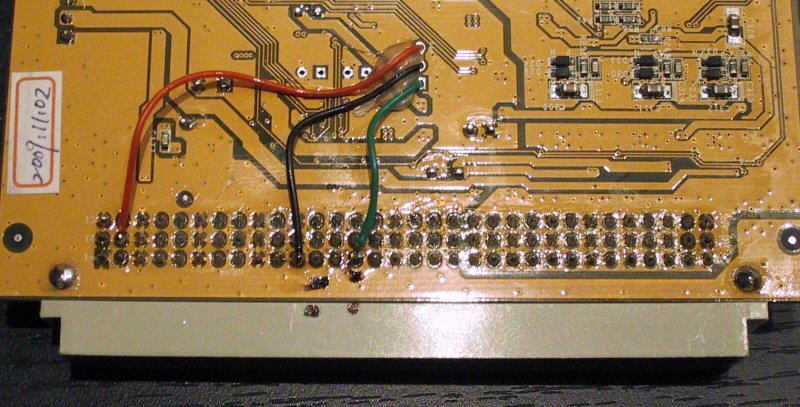
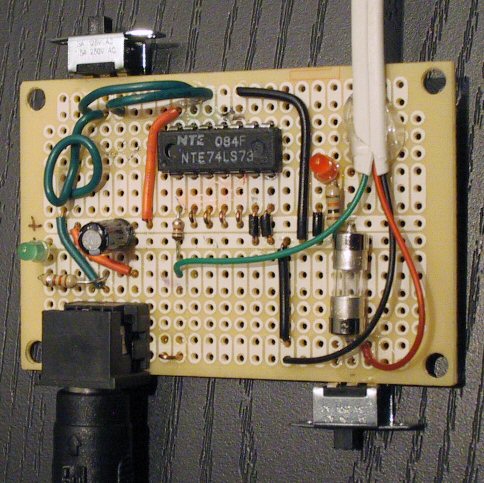
Originally Moome planned to only get sync timing of the Vsync plus... just like I am doing now with the little board pictured in my last post. This will work, but is not a fantastic solution because there is no polarity data in the Vsync pulse (Vsync looks the same for left and right eyes). What this translates to is that the polarity is backwards 50% of the time (50/50 chance of getting it right). So when you first start a movie, you have to pause and manually toggle the polarity with a dip switch back and fourth until you are sure it is correct. Also, if you fast forward, pause into screen saver, or drop a frame at any time during the movie, you have to redo polarity. This is a real drag.
The Lumagen protocol supports polarity so with their dongle the polarity will always be maintained and can't come undone. Furthermore, with the Lumagen protocol you can adjust phase (delay) to correct for inaccurate glasses timings like with the Samsungs (or to help with ghosting). And with the Lumagen protocol you can toggle polarity in the Lumagen menu when you use your glasses for the first time. This is cool because different brands of glasses need their polarity switched with respect to other brands.
So if Moome does decide to incorperate the Lumagen timing protocol into his board than you will not need the Lumagen sync dongle. But if Moome doesn't use the protocol I can't imagine using 3D long term with the PITA polarity adjustments that are constantly required. You will also be limited to only some brands of glasses unless Moome has a timing delay on the board (which he may do anyway with a trimmer resistor where the gamma trimmer is now). Moome and I have thrown a lot of ideas back and forth over the past several months and I don't know where he landed at the end or if he has even finalized his decisions.
Just an FYI, the Lumagen Dongle will be less than $400.
Regards,
craigr
_________________
JETI 1501-HiRes 2nm Spectroradiometer
JETI 1211 Spectroradiometer
Photo Research PR-650 Spectroradiometer
Klein K10-A Colorimeter
Murideo Fresco SIX-G HDMI 2.x Multimedia Generator
Murideo Fresco SIX-A HDMI 2.x Analyzer
Light Illusion ColourSpace XPT Color Calibration Software
Light Illusion LightSpace XPT Pro Version 10.x Color Calibration Software
OMARDRIS JVC Software Patch to use K10-A and Jeti with JVC OEM AutoCal Software!
Sencore CR7000 CRT Tube Analyzer / Rejuvenater
Authorized Dealer for Lumagen & just about everything worth buying
www.CIR-Engineering.com - craigr@cir-engineering.com
Phone: 865-405-6892
|
|
| Back to top |
|
|
overclkr
Joined: 08 Mar 2006
Posts: 4227
|
| Posted: Sat Jan 15, 2011 10:14 pm Post subject: |
|
|
| CIR Engineering wrote: | | overclkr wrote: |
Craig, you wont need this option using the moome 3D will you?
Cliff |
Yes you will most likely need the Lumagen 3D sync dongle for correct 3D even with the Moome. I haven't spoken with Moome in a few weeks, so I am not sure what he decided. I will say that Jim shared the information with Moome on their Lumagen 3D glasses protocol through HDMI. Jim even gave Moome the circuit design to build his IFB to support the Lumagen sync protocol. However, I don't know if Moome decided to incorporate the design in his new IFB or not (I need to call him).
Originally Moome planned to only get sync timing of the Vsync plus... just like I am doing now with the little board pictured in my last post. This will work, but is not a fantastic solution because there is no polarity data in the Vsync pulse (Vsync looks the same for left and right eyes). What this translates to is that the polarity is backwards 50% of the time (50/50 chance of getting it right). So when you first start a movie, you have to pause and manually toggle the polarity with a dip switch back and fourth until you are sure it is correct. Also, if you fast forward, pause into screen saver, or drop a frame at any time during the movie, you have to redo polarity. This is a real drag.
The Lumagen protocol supports polarity so with their dongle the polarity will always be maintained and can't come undone. Furthermore, with the Lumagen protocol you can adjust phase (delay) to correct for inaccurate glasses timings like with the Samsungs (or to help with ghosting). And with the Lumagen protocol you can toggle polarity in the Lumagen menu when you use your glasses for the first time. This is cool because different brands of glasses need their polarity switched with respect to other brands.
So if Moome does decide to incorperate the Lumagen timing protocol into his board than you will not need the Lumagen sync dongle. But if Moome doesn't use the protocol I can't imagine using 3D long term with the PITA polarity adjustments that are constantly required. You will also be limited to only some brands of glasses unless Moome has a timing delay on the board (which he may do anyway with a trimmer resistor where the gamma trimmer is now). Moome and I have thrown a lot of ideas back and forth over the past several months and I don't know where he landed at the end or if he has even finalized his decisions.
Just an FYI, the Lumagen Dongle will be less than $400.
Regards,
craigr |
Thanks for the info Craig. I would definitely like clarification on this as well as I purchased the V3 specifically for that purpose. From what I understand, all you need is the Radiance 3D for it to work currently with the V3 so looking foward to what you come up with.
Cliff
|
|
| Back to top |
|
|
Alan Head
Joined: 07 Aug 2006
Posts: 38
|
| Posted: Sun Jan 16, 2011 11:34 pm Post subject: |
|
|
| CIR Engineering wrote: |
Pat finished the timing application in the firmware yesterday. Jim is shipping me a hand built Lumagen sync dongle on Monday that will work with the Radiance alpha firmware for glasses output. Pat already has a timing delay in the software so that glasses timing can be adjusted for any setup.
craigr |
Thats great news as I purchased the sync dongle along with my Radiance XE+ 3D. Any updates on progress are very welcome
thanks
Alan
|
|
| Back to top |
|
|
KrisRoberts
Joined: 21 Jan 2007
Posts: 115
Location: San Diego
|
| Posted: Tue Jan 18, 2011 8:52 pm Post subject: |
|
|
|
I just bit the bullet and bought Moome's EXT V3 and the Gen2 emitter which should work with the nVidia 3D-Vision glasses I already have. The main goal is to get PS3 games working in 3D with my Acer H5360 but I will test it with the G90 and let you guys know how it works.
|
|
| Back to top |
|
|
CIR Engineering
Joined: 25 Aug 2008
Posts: 4269
Location: Chicago USA & Berlin Germany
|
| Posted: Wed Jan 19, 2011 6:17 am Post subject: |
|
|
I talked to Moome the other day and he says that the Lumagen glasses sync protocol will be supported with the new IFB cards. So right now in theory you will not need the Lumagen sync dongle if you have a Moome board with the correct 3D output.
craigr
_________________
JETI 1501-HiRes 2nm Spectroradiometer
JETI 1211 Spectroradiometer
Photo Research PR-650 Spectroradiometer
Klein K10-A Colorimeter
Murideo Fresco SIX-G HDMI 2.x Multimedia Generator
Murideo Fresco SIX-A HDMI 2.x Analyzer
Light Illusion ColourSpace XPT Color Calibration Software
Light Illusion LightSpace XPT Pro Version 10.x Color Calibration Software
OMARDRIS JVC Software Patch to use K10-A and Jeti with JVC OEM AutoCal Software!
Sencore CR7000 CRT Tube Analyzer / Rejuvenater
Authorized Dealer for Lumagen & just about everything worth buying
www.CIR-Engineering.com - craigr@cir-engineering.com
Phone: 865-405-6892
|
|
| Back to top |
|
|
|
|