| Author |
Message |
stefuel

Joined: 07 Mar 2006
Posts: 3353
Location: Green Harbor MA USA
|
| Posted: Sat Aug 22, 2009 8:47 pm Post subject: Electronics search guru needed |
|
|
I don't know how you guys do it. I have a SMT IC to identify. It has four legs and is about 1/4 X 3/16 inch in size. The markings on the top are as follows.
-5179+
PEC (and then some type of symbol) Then the bottom line is kind of funky
Bt102S I'm absolutely sure about the 102S. The "Bt" is questionable.
This is from a heating control that I'm trying to fix. Thanks,
_________________
Chip
A Barco is only a AmPro with training wheels
Card carrying member of the AVS chain gang.
|
|
| Back to top |
|
 |
RogueChili
Joined: 31 Mar 2008
Posts: 162
Location: Westfield, MA
|
| Posted: Sat Aug 22, 2009 9:10 pm Post subject: |
|
|
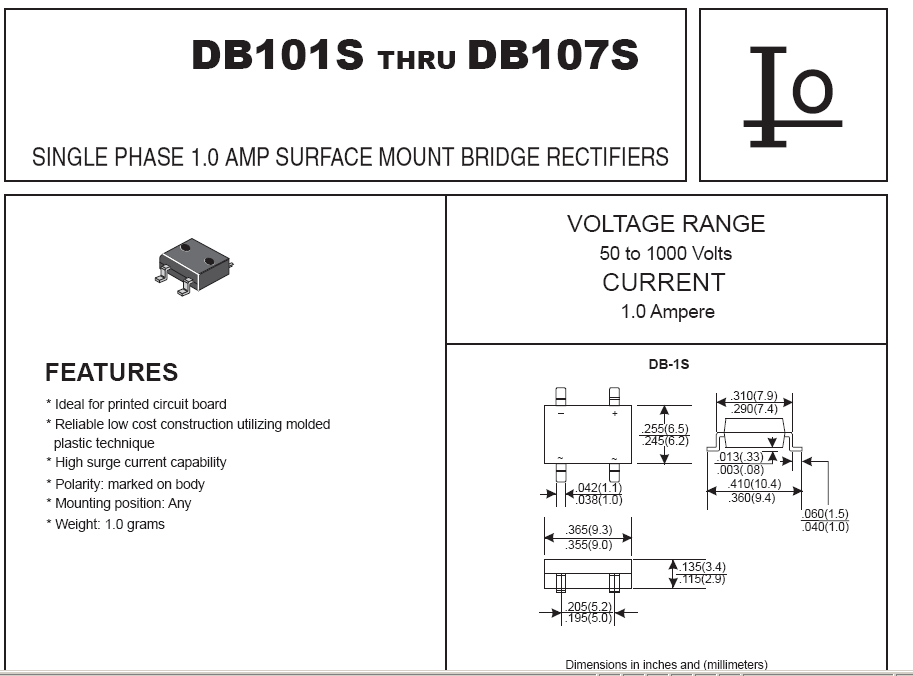
One possibility
| Description: |
|
| Filesize: |
37.72 KB |
| Viewed: |
3088 Time(s) |
|
|
|
| Back to top |
|
|
beun
Joined: 28 Jun 2006
Posts: 676
|
|
| Back to top |
|
|
stefuel
Joined: 07 Mar 2006
Posts: 3353
Location: Green Harbor MA USA
|
| Posted: Sun Aug 23, 2009 11:43 am Post subject: |
|
|
I'll try and take a picture of it later if needed. It is a bridge rectifier. I'm puzzled by the spec. This digital control is dual voltage. You can feed it 120VAC direct or 24VAC through the same connections. The DB102S has a maximum sustained voltage of 100V. Why did they not use a DB103S which has a max limit of 200V?
We have been replacing these controls to the tune of about 1-3 a week. They all seem to fail the same way. They are all wired 120VAC. They seem to fail after a power outtage or when you shut off the service switch and turn it back on. It then makes a loud buzzing noise and dies. This one that I have in front of me is buzzing, but has not died yet so it's a good candidate to find the problem. Rat shack has a 200V bridge rectifier that is through hole but I can make it work for a experiment.
I could just continue to replace these but the Co. that manufactures them is chapter 11, so who knows how long they will be around to provide replacements and we have a pant-load of these that we sold in the field.
_________________
Chip
A Barco is only a AmPro with training wheels
Card carrying member of the AVS chain gang.
|
|
| Back to top |
|
|
beun
Joined: 28 Jun 2006
Posts: 676
|
| Posted: Sun Aug 23, 2009 5:49 pm Post subject: |
|
|
Looking at the datasheet myself I would even go for the DB104S, that will give you some decent margin for voltage spikes since the maximum RMS voltage of the 103S is only 140V. As an replacement there is the DF04S from Diodes inc or Vishay which you can purchase through Digikey at a cost of $0.78 for the Vishay version.
The original part was obviously severely under-designed for 120V, I wonder how the rest of the circuit handles 120V.
_________________
ESL-0.5 Full Range Electrostatic Loudspeakers | RTC2200 Component to VGA Converter with Gamma Boost
|
|
| Back to top |
|
|
stefuel
Joined: 07 Mar 2006
Posts: 3353
Location: Green Harbor MA USA
|
| Posted: Sun Aug 23, 2009 11:33 pm Post subject: |
|
|
Well now I've gone and done it. As Rat Shack listed the through hole version of both the 200V and 400V rectifiers, I went ahead and tried to remove the original. I broke it. Don't ask  Before I did that though, I did locate a blown 4.7uF cap and replaced it with a exact part. The buzzing stopped but the control would not power up on 120VAC but would power up normally on 24VAC. I should have left it alone as I don't now think the rectifier is the problem as the relays on this board are 24VDC coil relays and the relays worked with the input of 24VAC so the rectifier must have been working. Before I did that though, I did locate a blown 4.7uF cap and replaced it with a exact part. The buzzing stopped but the control would not power up on 120VAC but would power up normally on 24VAC. I should have left it alone as I don't now think the rectifier is the problem as the relays on this board are 24VDC coil relays and the relays worked with the input of 24VAC so the rectifier must have been working.
So the rectifier was making the AC DC conversion from the 24VAC input. The board has a step-down transformer that is putting out 24VAC when fed 120VAC. So somewhere between the transformer and the rectifier is the problem.
So I guess the 100V rectifier is good enough for the application.
_________________
Chip
A Barco is only a AmPro with training wheels
Card carrying member of the AVS chain gang.
|
|
| Back to top |
|
|
tse
Joined: 03 May 2006
Posts: 1014
Location: Sweatbucket, Fl.
|
| Posted: Sun Aug 23, 2009 11:33 pm Post subject: |
|
|
A 100V part isn't going to rectify 120V line. Is there a step down transformer on the card? It might make sense to have that part on the secondary side.
Scott
_________________
"Were we directed from Washington when to sow and when to reap, we would soon want bread."
Thomas Jefferson
|
|
| Back to top |
|
|
beun
Joined: 28 Jun 2006
Posts: 676
|
|
| Back to top |
|
|
lostmandan
Joined: 09 Jul 2008
Posts: 146
Location: Kitchener/Waterloo, Ontario, Canada
|
| Posted: Mon Aug 24, 2009 6:08 pm Post subject: |
|
|
It sounds like the cap you replaced could very likely have been the source of the buzzing - failed capacitor in the right place can cause circuitry to behave oddly. If the cap filtered the relay coil power supply, the relays could emit the buzzing.
I would also agree - in dual voltage electronics that I have seen there is typically a transformer that steps down the 120VAC input to something very similar to the low voltage applied. At that point the rest of the circuitry can be designed around the low voltage. Are the 24VAC and 120VAC inputs on different connections or do the share the exact same pins/screws/wires?
Try doing a bit of reverse engineering with a multimeter (continuity range) and see where things connect. I would trace the 120VAC inputs on the board and see where they lead to.
If they do head to a transformer then you could measure the primary and secondary windings to each of them are continuous. If they are, try plugging it in and carefully measuring the voltage on primary and secondary to see if it is reasonable. If there is an open circuit on the transformer, there may be a thermal fuse built into it. Normally the leads can be seen coming out the to transformer's pins, but not always.
If the transformer is working, unplug and continue tracing the circuit.
If there isn't a transformer then maybe the designers are using some other tricks to get that power supply within rating. I figure if the control is UL-rated it would have passed safety and UL wouldn't have missed the input bridge rectifier 
If you can fix these controls then you might well have found a lucrative business
|
|
| Back to top |
|
|
|
|