| Author |
Message |
benareeno
Joined: 22 Mar 2006
Posts: 1614
Location: ottawa, canada
|
| Posted: Wed Dec 24, 2008 12:00 am Post subject: tinting glycol...one more question |
|
|
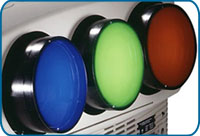
in the advanced procedures area it says that he used magenta and cyan inks...but then the pictures of the inks appear to be green and red...what gives? Is the green and red superior, or should I go with cyan and magenta?
Ben
|
|
| Back to top |
|
 |
Robert A. Hill
Joined: 19 May 2006
Posts: 182
Location: Simpsonville, SC
|
| Posted: Wed Dec 24, 2008 2:10 am Post subject: |
|
|
|
I used magenta and cyan.
|
|
| Back to top |
|
|
mike calcott

Joined: 18 May 2006
Posts: 307
Location: Australia
|
| Posted: Wed Dec 24, 2008 2:21 am Post subject: |
|
|
Magenta is a shade of red, and cyan is a shade of blue, these are the correct tints for CRT use
_________________
Old dog learning new tricks
|
|
| Back to top |
|
|
CRT_Ben
Joined: 28 Aug 2006
Posts: 1684
Location: Northern Virginia
|
| Posted: Wed Dec 24, 2008 4:41 am Post subject: |
|
|
| mike calcott wrote: | | Magenta is a shade of red, and cyan is a shade of blue, these are the correct tints for CRT use |
/Tangent warning: This is just something I find fascinating. So we have two different sets of primaries here (Light (the CRT), and pigment (the dye)). Light is "additive" where all three primaries combined make white, and pigment is "subtractive" were all three primaries combined make black.
Primaries of light: Red, Green, Blue
Primaries of pigment: Magenta, Cyan, Yellow
Secondaries of light: Magenta (Red and Blue), Cyan (Blue and Green), Yellow (Red and Green)
Secondaries of pigment: Red (Magenta and Yellow), Green (Cyan and Yellow), Blue (Cyan and Magenta)
It's funny the way nature works, huh?
|
|
| Back to top |
|
|
|
|