| Author |
Message |
snkby
Joined: 12 May 2007
Posts: 134
|
| Posted: Sun Oct 19, 2008 5:56 pm Post subject: minimum bandwidth required for 1080i ? |
|
|
the reason i ask is that a friend has an older hk avr520 that states its video bandwidth at 35mhz.
i want to use his hk avr520 for all video switching.
i wanted to get him into bluray for his 52" 1080i toshiba rp crt but im thinking that 35mhz is good for only 480p and 75mhz was needed for 1080i.
the hk avr520 doesnt state that it can pass 1080i but im thinking thats because passing 1080i wasnt even an issue back then.
thanks.
|
|
| Back to top |
|
 |
Brooklyn

Joined: 17 Sep 2007
Posts: 494
Location: Morgan Hill, CA
|
|
| Back to top |
|
|
snkby
Joined: 12 May 2007
Posts: 134
|
| Posted: Mon Oct 20, 2008 12:03 am Post subject: |
|
|
thanks brooklyn!
hes getting a yamaha rx-v1800 for being able to decode the truehd audio too.
|
|
| Back to top |
|
|
Person99
Joined: 09 Mar 2006
Posts: 4899
Location: Flower Mound, TX
|
| Posted: Mon Oct 20, 2008 2:50 pm Post subject: |
|
|
About bandwidth: the more you have, the sharper the picture. A display only needs about the bandwidth the resolution has, but the more bandwidth it has, the sharper the picture.
Extron advanced a theory that many people subscribe to that suggests any intermediate device (switch, etc) requires 3 times the bandwidth necessary to carry the signal to avoid degradation. In this case, the AVR would have to have about 110 MHz to not cause any softening of the image.
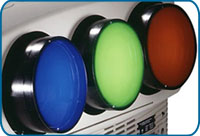
Now, on the 7" ES focus tubes of his 52" CRT RPTV which really can only resolve about 1300 of the horizontal 1920 of a 1080i signal, he'll never notice this softening from lack of bandwidth.
For the best picture out of that set, it is IMPERATIVE that you perform mechanical and electrostatic focus on it (if it has not been professionally calibrated). CRT RPTVs are horrible from the factory and need to be redone about every other year in typical living room usage.
_________________
Dave
A train station is where the train stops. A bus station is where the bus stops. On my desk, I have a work station....
|
|
| Back to top |
|
|
snkby
Joined: 12 May 2007
Posts: 134
|
| Posted: Mon Oct 20, 2008 3:55 pm Post subject: |
|
|
|
thanks person99!
|
|
| Back to top |
|
|
ecrabb
Forum Moderator

Joined: 13 Mar 2006
Posts: 15909
Location: Utah
TV/Projector: JVC RS40, Epson 5010
|
| Posted: Mon Oct 20, 2008 4:23 pm Post subject: |
|
|
I'll also point out that specs only mean so much. Many AVR's from any more than a year or two ago were notorious for screwing up the picture quality pretty badly - regardless of any published bandwidth specifications. High-frequency roll-off (resolution loss), color shift, and noise were pretty typical for most lower-end gear.
The only way to know for sure is to get a copy of Digital Video Essentials on Blu-ray and do some A-B comparisons. Test it running through the AVR, make notes of how the resolution patterns looked, then do the same thing again with the Blu-ray player connected directly to the display. That way, you'll be able to see what, if anything the AVR is doing to the picture, and decide if you want to keep it in the chain or not.
If you don't do a test, you'll never know!
SC
|
|
| Back to top |
|
|
snkby
Joined: 12 May 2007
Posts: 134
|
| Posted: Mon Oct 20, 2008 7:58 pm Post subject: |
|
|
thanks ecrabb!
hes getting the yamaha rx-v1800.
a friend that used to do certification testing for thx labs said the yamahas were always at the top for video quality pass-thru.
its so true about specs vs real life.
like rf stuff where the published distance is for a clear day with no obstructions and the wind blowing towards the receiver.
|
|
| Back to top |
|
|
|
|